

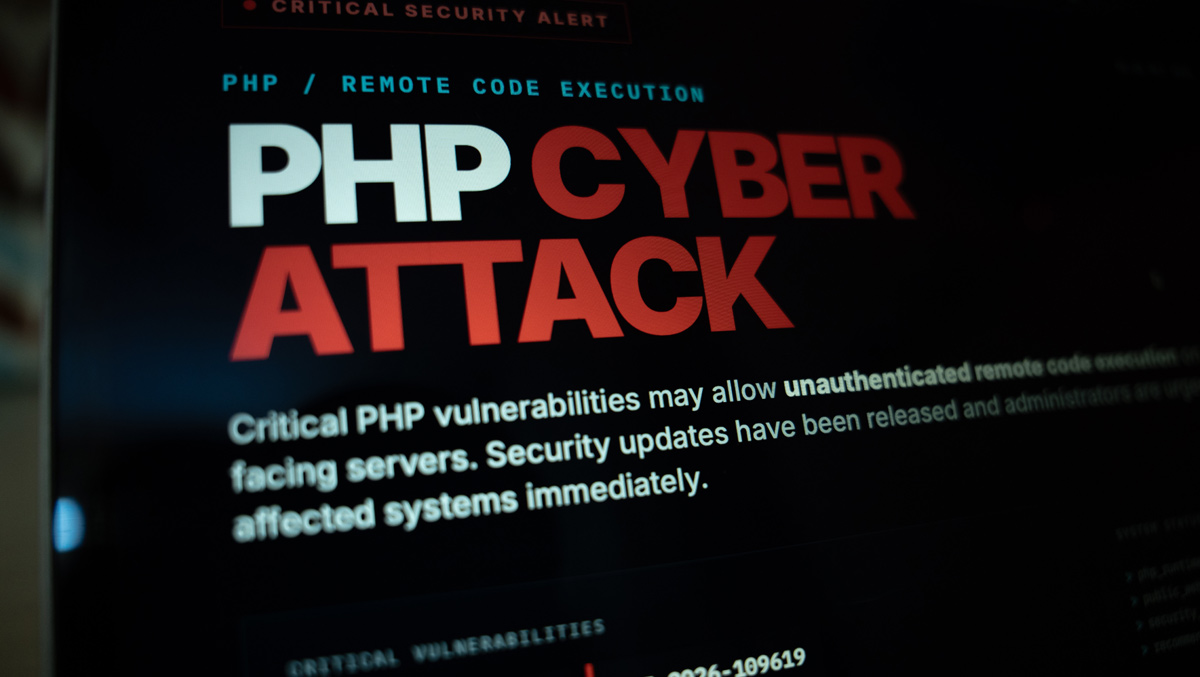
Recent cyber attacks targeting vulnerable PHP-based websites have once again highlighted the importance of keeping websites fully updated. While many business owners focus on content and design, outdated website software remains one of the most common entry points for cyber criminals.
Whether your website runs on WordPress, Joomla, Drupal, Magento, or another Content Management System (CMS), ensuring both your CMS and PHP version are regularly updated is critical for maintaining security, performance, and reliability.
What Happened?
Recent security incidents have shown attackers actively scanning the internet for websites running outdated versions of PHP and popular CMS platforms. Once vulnerabilities are identified, automated tools can attempt to gain unauthorised access, inject malicious code, steal data, or even take websites offline.
Cyber criminals don't specifically target individual businesses. Instead, they often deploy automated attacks searching for any website with known weaknesses. This means businesses of all sizes can be affected.
Why Updates Matter
Enhanced Security
Software developers continually release security patches to address newly discovered vulnerabilities. Running older versions leaves websites exposed to threats that may already be publicly documented and actively exploited.
Improved Website Performance
Newer versions of PHP are significantly faster and more efficient than older releases. This can improve page loading times, enhance user experience, and benefit search engine rankings.
Better Compatibility
Website plugins, themes, and integrations are regularly updated to support the latest software versions. Remaining on outdated systems can create compatibility issues, functionality problems, and unexpected downtime.
Reduced Risk of Data Breaches
Outdated software can expose customer information, contact forms, user accounts, and business data. Regular updates help minimise the risk of security breaches and potential regulatory consequences.
Ongoing Vendor Support
Software providers eventually stop supporting older versions. Once support ends, no further security patches are released, leaving vulnerable websites increasingly exposed over time.
The Risks of Delaying Updates
Businesses often postpone updates due to concerns about potential disruption. However, the risks of not updating are usually far greater than the risks associated with properly managed maintenance.
Potential consequences include:
- Website defacement
- Malware infections
- Loss of customer trust
- Search engine blacklisting
- Data theft
- Website downtime
- Recovery and remediation costs
Our Recommendation
We strongly recommend ensuring your website is running:
- The latest stable version of PHP
- The latest supported version of your CMS
- Up-to-date plugins, extensions, and themes
- Regular backups and security monitoring
Whilst no system can ever be guaranteed 100% secure, keeping your website updated significantly reduces risk and ensures you benefit from the latest security protections, performance improvements, and bug fixes.
How We Can Help
If you're unsure whether your website is fully up to date, our team can perform a comprehensive review of your website's software versions, identify any security concerns, and recommend any necessary updates.
In today's threat landscape, proactive maintenance is one of the most effective ways to protect your business online.
Don't wait until a vulnerability becomes a problem. Keeping your website updated is one of the simplest and most effective investments you can make in your website's security.