

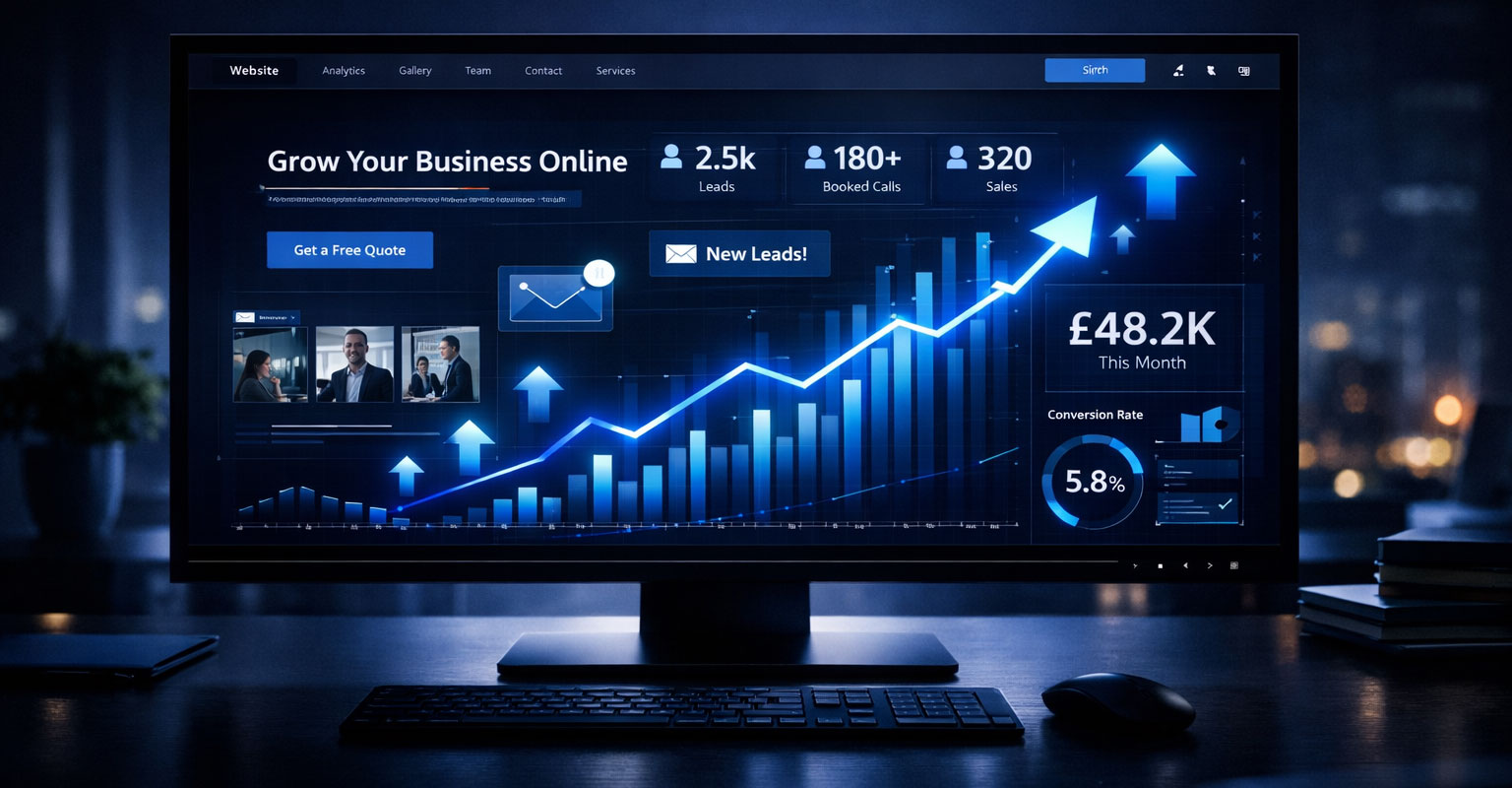
For years, businesses viewed their website as a digital brochure — something they “needed to have” but didn’t always understand. In 2026, that mindset has shifted dramatically. Companies now see their website as a core business asset: a sales engine, a trust builder, a customer service tool, and a measurable driver of growth.
Across industries, budgets are being redirected, strategies are being rewritten, and expectations are rising. So what are businesses actually prioritising when it comes to their website today?
Below is a breakdown of the real concerns, motivations, and goals shaping the decisions of modern business owners.
1. Lead Generation and Conversion — Not Just Traffic
Businesses don’t want “more visitors”. They want:
-
qualified enquiries
-
booked appointments
-
sales
-
quote requests
-
newsletter sign-ups
The website is now judged on conversion performance, not aesthetics. Owners want:
-
clear CTAs
-
streamlined funnels
-
persuasive messaging
-
fast-loading landing pages
-
integrated CRM tracking
If a website isn’t generating leads, it’s considered broken.
2. Trust and Credibility — The New Currency
With AI-generated content everywhere, trust has become a competitive advantage.
Businesses want their website to:
-
look professional
-
feel credible
-
showcase real people
-
demonstrate expertise
-
prove legitimacy
This is why:
-
documentary-style photography
-
authentic testimonials
-
case studies
-
certifications
-
transparent pricing
are becoming essential. Trust is now a design requirement.
3. Speed, Performance, and Core Web Vitals
Slow websites kill conversions — and business owners know it.
They’re increasingly asking for:
-
faster hosting
-
lightweight builds
-
optimised images
-
reduced scripts
-
better mobile performance
Speed is no longer a technical detail. It’s a business priority.
4. Clear Messaging and Brand Storytelling
Businesses are realising that customers don’t buy services — they buy clarity.
Owners want:
-
simple messaging
-
strong value propositions
-
clear differentiation
-
benefit-led copy
-
brand personality
Content-led design is making a comeback because businesses finally understand that words sell.
5. Better SEO — But Not the Old Kind
Traditional SEO is fading. Businesses now care about:
-
local visibility
-
Google Business Profile optimisation
-
AI search readiness
-
structured data
-
content quality
-
authority building
They want to appear in AI summaries, map packs, and zero-click search results — not just organic rankings.
6. Integration With Their Business Systems
Websites are no longer standalone. Businesses want:
-
CRM integration
-
booking systems
-
payment gateways
-
automation workflows
-
live chat
-
analytics dashboards
The website must connect seamlessly with the rest of the business.
7. Security, Reliability, and Peace of Mind
Owners want to know:
-
their site won’t go down
-
their data is safe
-
updates are handled
-
backups exist
-
someone is monitoring things
Maintenance plans are becoming more valuable than ever.
8. A Website That Looks Modern — But Isn’t Trend-Chasing
Businesses want a site that feels:
-
clean
-
premium
-
trustworthy
-
professional
But they don’t want gimmicks. They want design that supports their goals, not distracts from them.
9. A Partner, Not Just a Designer
More than anything, businesses want guidance.
They want someone who:
-
understands their industry
-
advises them
-
simplifies the technical jargon
-
helps them make decisions
-
supports them long-term
The biggest trend of all: businesses want a strategic partner, not a pixel-pusher.
Final Thought
The modern business website is no longer a digital accessory — it’s a core operational tool. Companies are investing in clarity, speed, trust, integration, and measurable results. The agencies that understand these priorities are the ones winning long-term relationships and high-value projects.